Graduate Student Seminar
October 10, 2025
12:45 p.m. ET
7500 Wean Hall

October 10, 2025
12:45 p.m. ET
7500 Wean Hall
Designing multicomponent materials is challenging with density functional theory (DFT) because it computationally expensive to evaluate all the ways that elements may combine and react. It is also difficult to estimate free energy contributions to reactions and to locate reaction barriers with DFT. The Open Catalyst Project is developing machine learned potentials (MLP) to mitigate these challenges. These MLPs are trained on 100M+ DFT calculations spanning 55 different elements and 80+ adsorbates that are relevant in catalysis and energy applications. Nominally these models were trained to predict energy and forces, and from these one can derive reaction energies. We will show in this talk, however, that these models also show great utility in computing reaction barriers, and in estimating free energy contributions to reactions. This opens the door to a post-scaling era of computational catalysis where reaction barriers can be computed in complex reaction networks with near DFT accuracy rather than relying on less accurate linear scaling relations. We will show some case studies of results and discuss future research directions in this area.
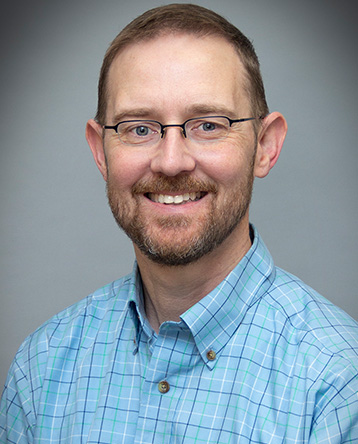 John Kitchin, John E. Swearingen Professor of Chemical Engineering
 Kitchin completed his B.S. in Chemistry at North Carolina State University. He completed a M.S. in Materials Science and a Ph.D. in Chemical Engineering at the University of Delaware in 2004 under the advisement of Dr. Jingguang Chen and Dr. Mark Barteau. He received an Alexander von Humboldt postdoctoral fellowship and lived in Berlin, Germany for 1 ½ years studying alloy segregation with Karsten Reuter and Matthias Scheffler in the Theory Department at the Fritz Haber Institut. Professor Kitchin began a tenure-track faculty position in the Chemical Engineering Department at Carnegie Mellon University in January of 2006. He is currently a Full Professor. At CMU, Professor Kitchin works in the areas of alloy catalysis and molecular simulation. He was awarded a DOE Early Career award in 2010 to investigate multifunctional oxide electrocatalysts for the oxygen evolution reaction in water splitting using experimental and computational methods. He received a Presidential Early Career Award for Scientists and Engineers in 2011. He completed a sabbatical in the Accelerated Science group at Google learning to apply machine learning to scientific and engineering problems in 2018.